
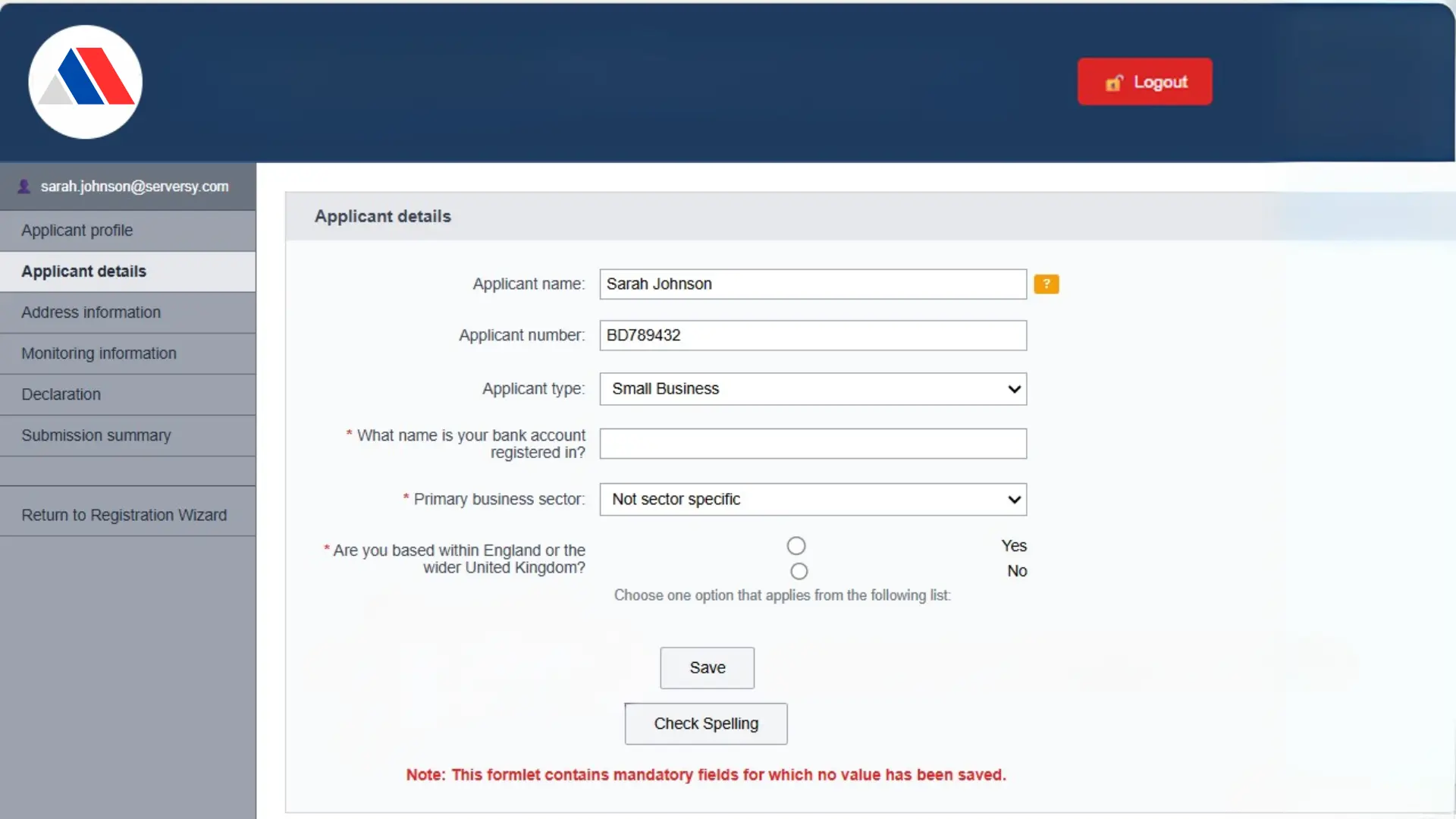
An outdated web portal does not always need replacing. Every portal is built on three layers: the data foundation, the logic engine, and the user interface. Problems that look fundamental are often concentrated in one layer, usually the interface.
When the data structure and business logic underneath are sound, targeted modernisation of the visible layer can transform the user experience at a fraction of the cost and disruption of a full rebuild. The decision depends on assessing each layer independently rather than treating the portal as a single failing website.
The Rebuild-or-Tolerate Trap
Most organisations that recognise their portal is underperforming still default to one of two responses: commission a full replacement or keep patching what they have.
The cost and disruption of a rebuild risk paralysis, while patchwork fixes further erode user satisfaction. This binary thinking persists because few teams examine the source of their portal problems. Once you assess each architectural layer on its own terms, a third option may become visible.
Portal Architecture That Determines Success
Behind every web portal is a three-tier architecture. Like examining a building’s foundation, structure, and facade, evaluating these layers independently reveals whether problems are systemic or localised to determine where strategic investments will deliver the most significant returns.
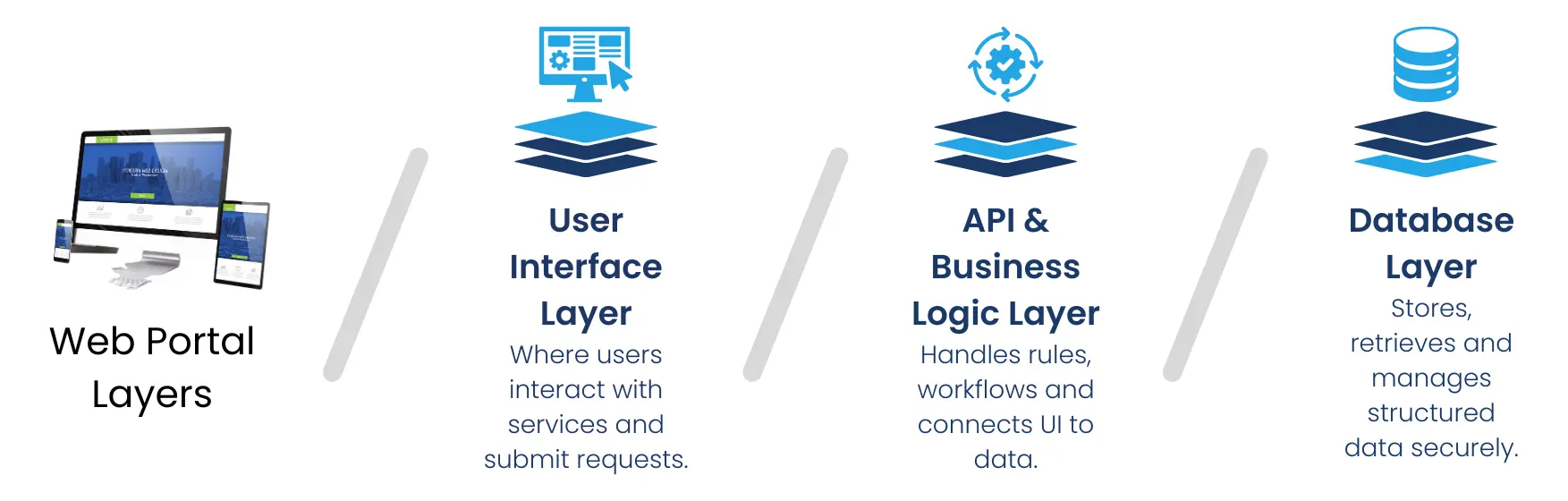
The Data Foundation houses your organisation’s critical information, including user records, transaction histories, application data, and process states.
For Microsoft-based websites, data is typically stored in Dataverse or Azure. Even seemingly outdated web portals often still have a sound and well-organised data structure, which can support modern functionality despite surface-level problems.
The Logic Engine manages business rules, workflow orchestration, and API integrations.
This middle layer determines how data flows between your database and portal users, handling everything from authentication to third-party connections. Modern logic layers can integrate with payment systems, communication platforms, and other services that enhance portal capabilities significantly.
The User Interface covers everything users see and interact with, including visual design, navigation and forms.
This layer most visibly shows its age in portals designed 10+ years ago, with outdated designs that don’t work well on mobile devices and workflows that reflect internal processes rather than user needs.
Where Portal Problems Really Live
The key to portal transformation is understanding which of these three layers is failing.
This assessment determines if you’re dealing with fundamental architectural problems or merely presentation issues that can be addressed more easily.
Comprehensive failure across all three layers overwhelmingly signals the need for complete replacement. This occurs when data structures are corrupted or inadequate, business logic can’t support current requirements, and user interfaces are beyond salvaging.
Solid foundations with surface problems offer the most promising improvement opportunities. If your data layer remains robust and your business logic functions adequately, but your user interface creates barriers to effective use, targeted improvements can transform the entire experience. This approach preserves your infrastructure investments.
Mixed scenarios demand careful evaluation of costs versus benefits. If your data foundation is strong but your logic layer and interface need significant work, you might achieve better value through replacement while preserving and migrating your data assets.
Modern Portal Capabilities
Effective portal modernisation must go beyond cosmetic improvements.
While updated visual design matters, true transformation must address fundamental user experience challenges and add capabilities that weren’t previously available.
Streamlined workflows involve redesigning processes based on user needs rather than system limitations. Instead of forcing people through multiple screens for simple tasks, modern portals consolidate steps and guide individuals toward successful completion.
Responsive functionality makes portals work consistently across devices, adapting visual layout and actual functionality to match how users access the system.
Personalised experiences are powered by data in Dynamics 365 and other connected services to provide relevant, customised interactions. Rather than presenting the same static information to everyone, modern portals can highlight relevant updates, suggest next actions, and provide tailored dashboards.
Integrated support incorporates educational resources and contextual help directly into user workflows. This proves particularly valuable for processes like membership renewals or grant applications. People might not interact with these processes frequently enough to remember all requirements and procedures.
Intelligent features can include enhanced search capabilities, automated suggestions, and smart designs that reduce the cognitive effort required to use the portal.
The Business Impact of Strategic Modernisation
When companies approach portal change strategically, they often achieve better outcomes than those who default to complete replacement.
Increased user satisfaction directly impacts organisational goals. For example, portal experiences can influence membership organisations’ retention rates and engagement levels. Users who can accomplish their goals efficiently are more likely to maintain their relationships and participate in additional activities.
Operational efficiency improves through automated processes and reduced support requirements. Modern portals can handle routine tasks that previously required staff intervention, freeing resources for higher-value activities while providing users with immediate responses.
Businesses gain a competitive advantage when they provide online experiences that match expectations. This is equally important for commercial and non-profit organisations competing for engagement and loyalty in increasingly digital environments.
Making the Right Decision
Successful portal decisions start with an honest assessment rather than assumptions.
Begin by evaluating each architectural layer independently. Combine technical analysis with user feedback to understand where problems originate.
Evaluate the total cost of ownership over realistic timeframes, including not just portal development costs but training, integration work, and the opportunity costs of disruption during implementation. Compare these against the costs of continuing with current limitations and the potential benefits of improved user experience.
These types of website projects typically involve lower upfront costs and shorter timelines than website replacements. However, they may have limitations that become apparent over time. Complete rebuilds require larger initial outlays but can provide more flexibility for future growth and changes.
Moving Forward
Your outdated portal doesn’t have to remain a source of frustration.
By understanding the underlying architecture and focusing on improvements that will deliver the most impact, you can often achieve your goals more cost-effectively.
Whether you choose targeted improvements or complete replacement, the critical step is conducting a thorough assessment that reveals where your specific challenges originate.
ServerSys brings extensive experience in both portal revamps and new development approaches. Our team can help you evaluate your current portal architecture, understand your options, and implement solutions that transform user experiences.
Rather than accepting the false choice between expensive replacement and continued frustration, discover what’s possible with your existing portal foundation.
Ready to assess your portal’s potential? Contact us to discuss your situation and explore your modernisation options.
Related:
How Intelligent Portals Redefine Business Success
The Silent Revolution: How Modern Customer Preferences Are Reshaping Service Strategies