

Your events programme does its job. People come together, positions take shape over coffee that never would over email, and members go away feeling part of something. But until your next meeting, these relationships might run on newsletters.
The work carries on regardless. Government departments, committees and regulators open consultations on their own timetables, with no regard for when your working groups convene. A call for evidence with a few weeks’ deadline might land and close before you gathers again.
Emails, briefings and event invitations travel in one direction. They keep members informed, but representation depends on what flows the other way: evidence, priorities, requests for help. When the return route is an inbox, fragmented contributions arrive, needing someone to collate them.
A portal makes it easier to give and process that information. Members submit evidence on demand, raise guidance requests and follow the work they care about, between scheduled meetings.
Your existing channels keep working while a portal carries the interactions they were never designed for.
Consultations reach beyond those in the room
Meetings are where hard decisions are taken. No portal replaces that, but the members with the sharpest evidence might not always attend.
That’s where a portal provides transparency and encourages wider participation so responses reflect the full weight of your membership. Members can see each open call for evidence, the group steering it, and a structured way to record their experience.
The committee debates difficult questions and agrees the line, drawing on input from across the membership rather than a segment. A response like that is harder to dismiss as one committee’s view.
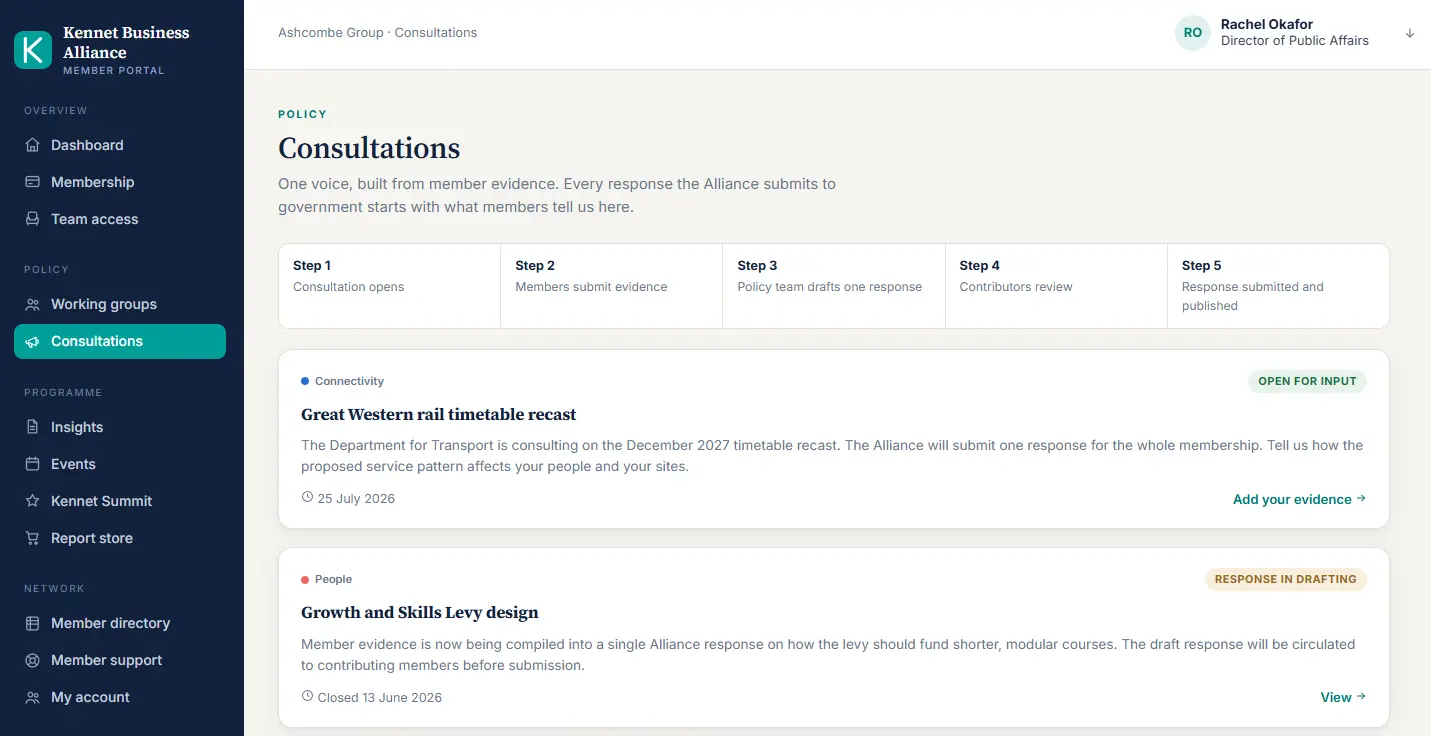
When a member follows the line from the evidence they provided in May to the response filed in July, the case for staying shouldn’t depend on anyone’s memory of a conference.
Working groups that hold their momentum
Group work suffers a particular between-meetings problem. Three months is long enough for a draft position paper to go stale and for a new joiner to lose the thread.
A portal gives each group a home for its minutes, papers and membership, so a contact arriving mid-cycle catches up without a briefing call, and a chair can circulate a second draft knowing everyone can find the first.
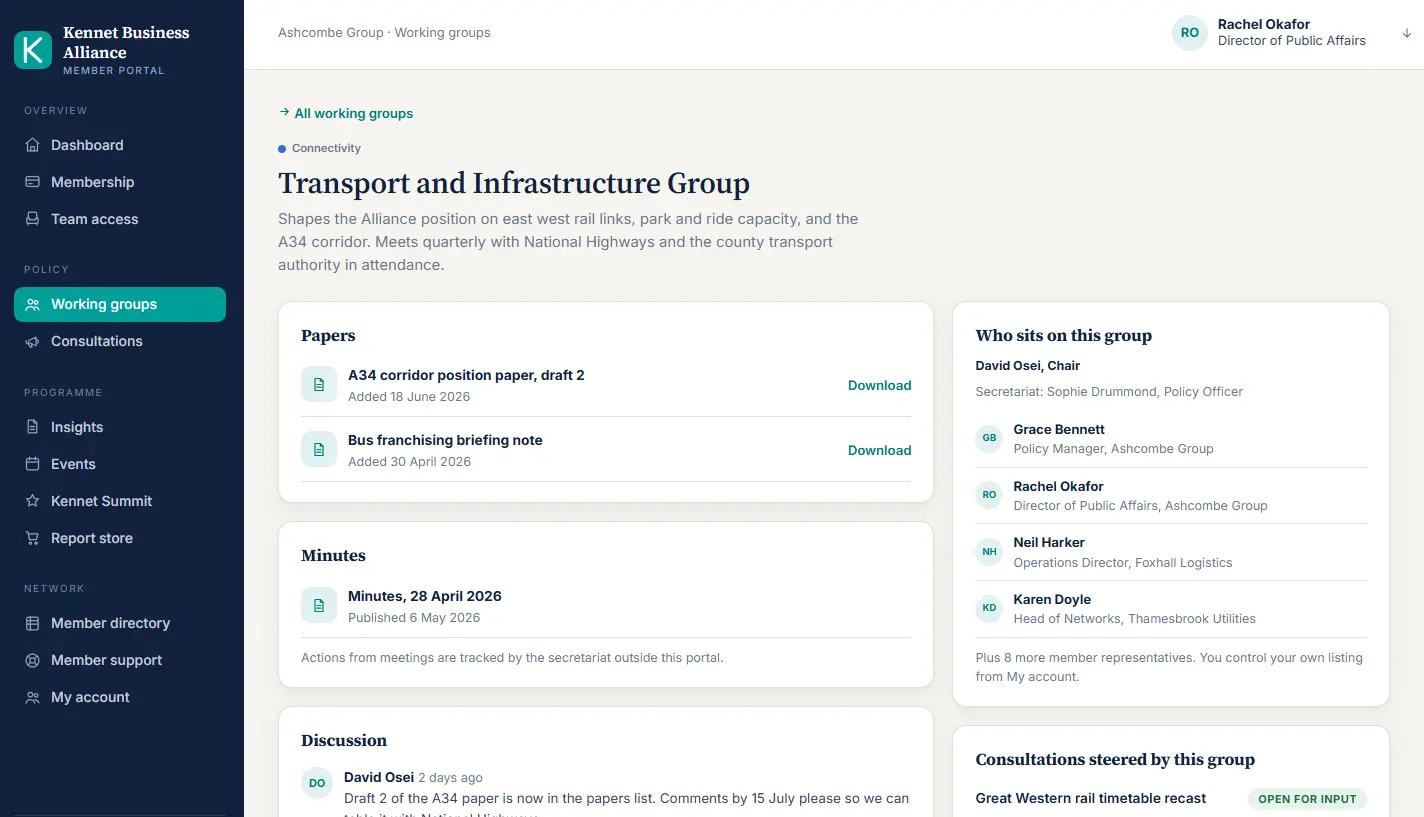
There is a point of delicacy too. Around the table, some of those collaborating compete in the same market the rest of the week. Content gated on the portal, with directory visibility each person controls for themselves, lets these exchanges proceed on terms everyone trusts.
Membership carried by people
Many member relationships rely on a single named contact. If that person departs, years of familiarity go with them, and the membership goes dark until someone rebuilds it.
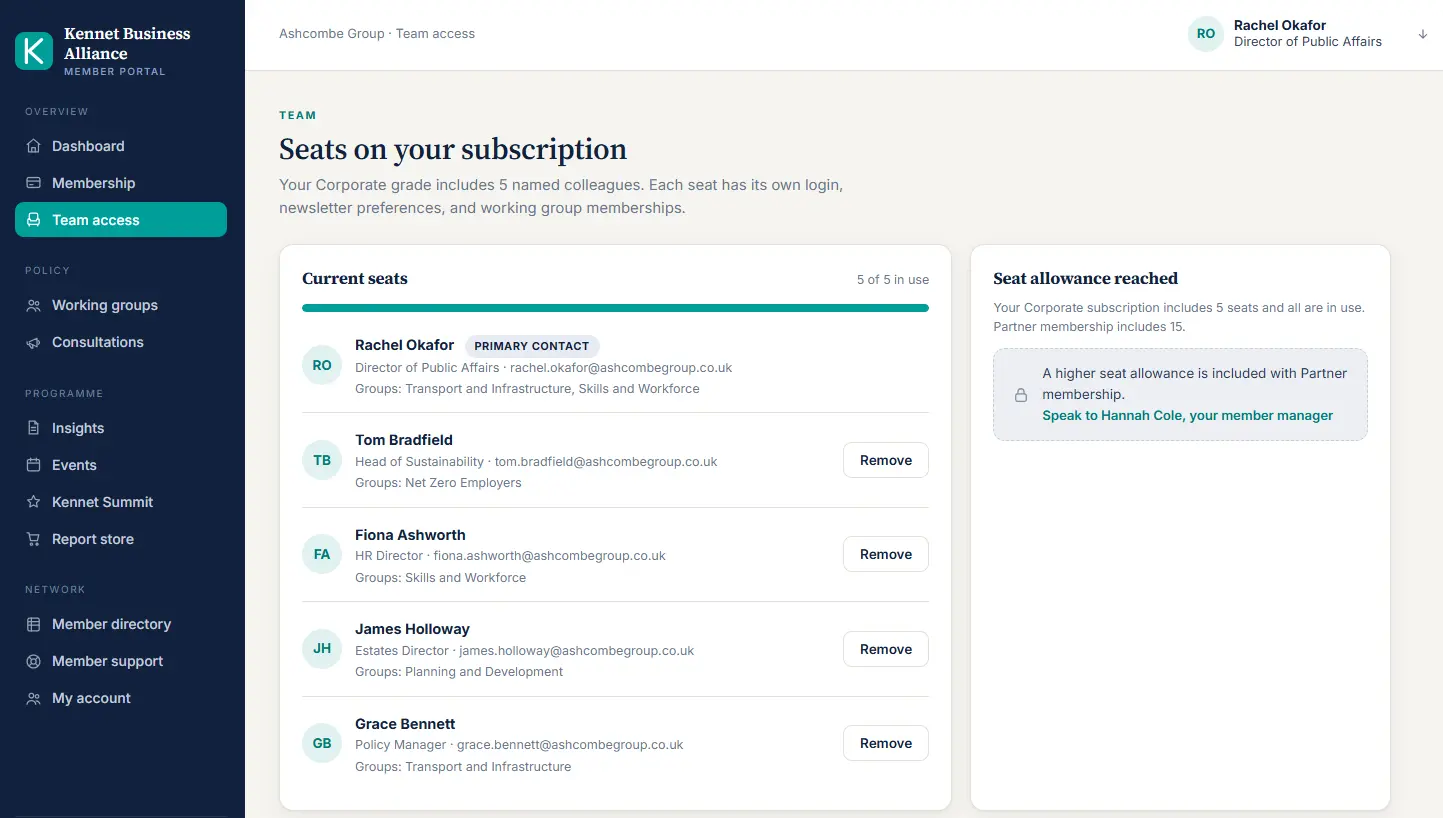
Several people at each organisation can hold their own portal account. A compliance manager tracks regulatory updates, and a technical specialist follows the latest research.
That breadth changes the renewal risk. A membership with five people involved across different areas is a firmer foundation than one sustained by a single person, however engaged.
Engagement you can point to
MemberWise’s Digital Excellence research has long identified measuring member engagement as one of the sector’s most stubborn problems. Open rates and attendance lists describe activity around channels without telling you much about any single organisation.
Portal activity differs because each interaction writes back to a central record.
For example, our member portals track what each representative does back to Microsoft Dynamics 365. That can include evidence submitted, papers downloaded and guidance requested. Ahead of a renewal conversation, you can see engagement across each contact.
Improving your meetings
None of this replaces meeting in person. The hard conversations and decisions are still made across a table, and the trust that holds an association together doesn’t form through a screen.
But what a portal changes is how prepared people are before they start.
A member who has read the minutes, seen the latest draft and shared their evidence arrives ready to make decisions. The meeting can then focus on the questions that genuinely need everyone present, and spend far less time catching people up on what they missed.
Demonstrating portals for business associations & trade bodies
Building a portal that fits how you work
A member portal works best as an extension of the systems you already run. Built on the same Dynamics 365 that holds your membership data, it records consultation responses, event bookings and guidance requests against the right person, with no duplicate entries.
That is the work we do at ServerSys and our specialist division The Portal Company.
We build these portals to run on the Microsoft Platform and work with Dynamics 365 for UK associations and membership bodies. They are shaped around your consultation cycle, your working groups and how members stay engaged between meetings.
If you can see a portal like this working alongside your events and communications, contact us and we will show you a working example and scope what yours would take to build.