
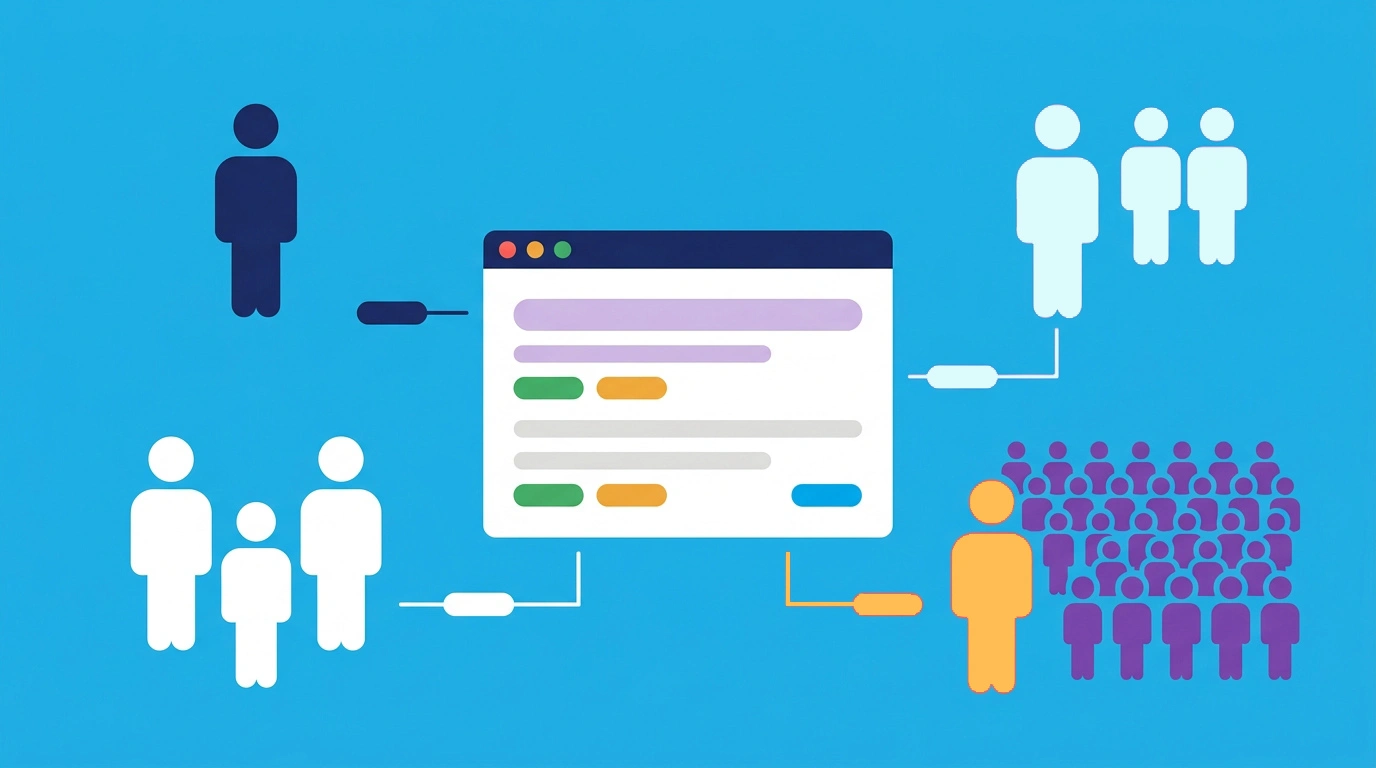
Most web portals are built around a user who fits a predictable structure. That includes individual customers to an organisation or suppliers to a business. What portal users see and what functions they can access vary as circumstances and entitlements change, but the underlying structure is often the same for everyone who signs in.
An exception is the insurance sector because each policy can relate to a wide mix of people holding different types of cover.
There are fundamental differences in how people connect with their policies.
One person might hold an individual policy, two might be joint policyholders, and several hundred might be grouped under an employer-run scheme.
Using a medical insurance portal as the scenario, we can see how one portal needs to respond to several very different user situations.
What each person sees when they sign in
Someone holding a policy in their own name gets what you’d expect. Their cover, any claims they’ve made, their pre-authorisations, and the ability to make further claims or request support. Nothing there will surprise anyone who has used a customer portal.
A married couple are joint and equal policyholders. Both can act on the cover in full, yet neither sees the other’s claims, because personal health information stays private between spouses.
When a child is also covered, either parent can act for them, and both see those claims, because a minor has no sign-in of their own.
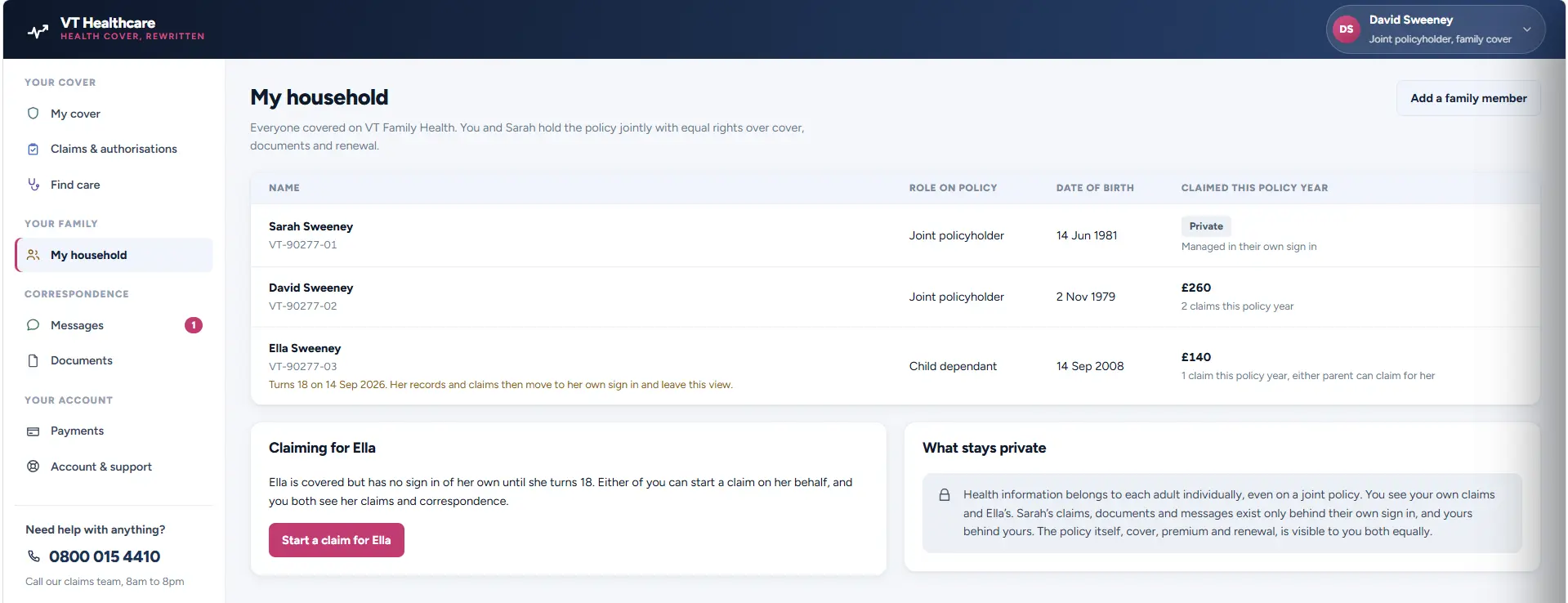
As children get older, their information requires different handling, even while they remain covered under the household policy. A child or young adult may be given their own sign-in so they can manage their claims privately, while the policyholders continue to manage cover, payment and renewal. The exact age, consent rules and access model vary between insurers, and both the data model and the portal reflect whichever rules apply.
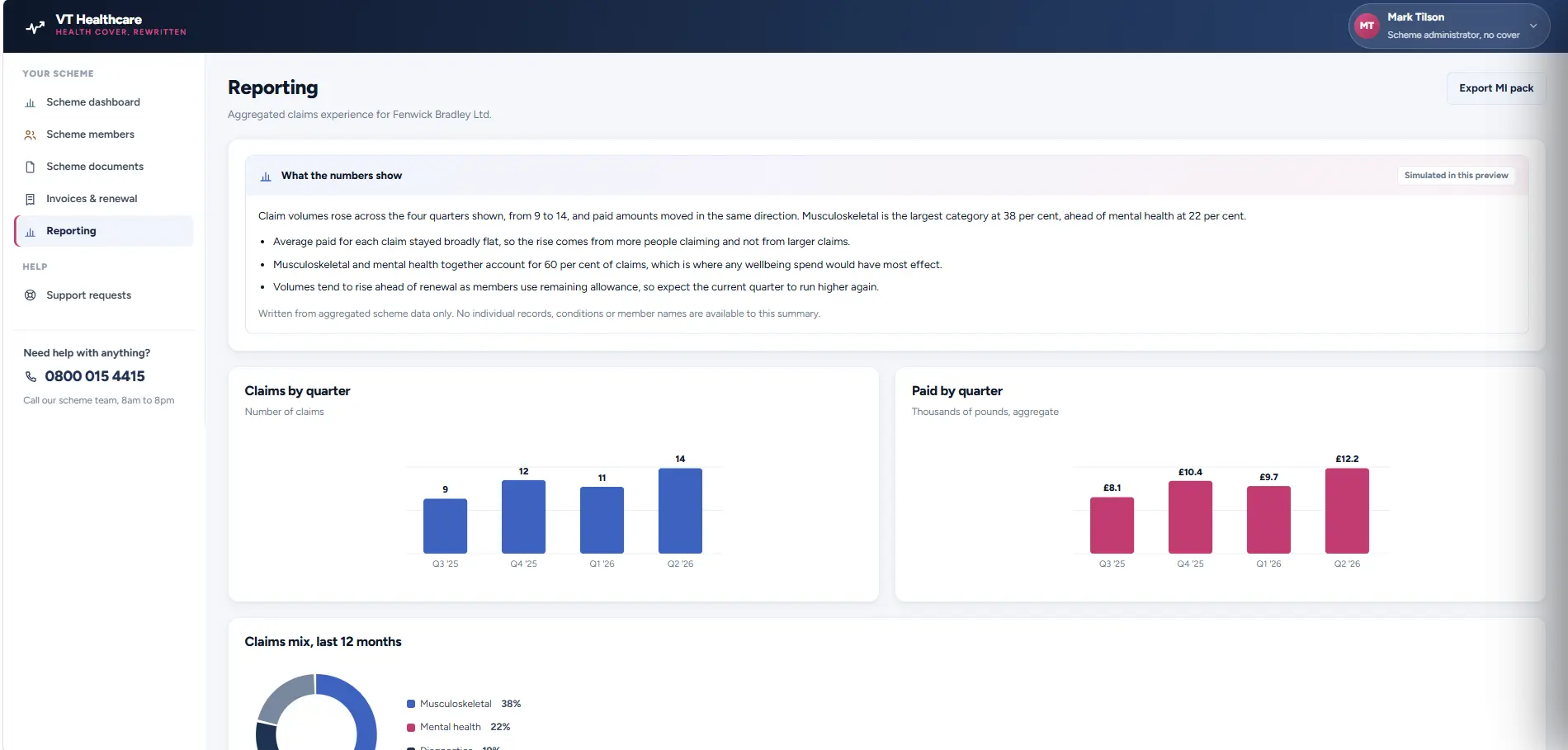
Policies related to employer-backed schemes work differently again. Someone covered through their work signs in and sees roughly what an individual policyholder sees, dealing with their own cover without their employer ever seeing the detail, but they don’t manage premiums or renewal.
Scheme administrators handle that. They sign into the same portal and manage who is covered by the organisational account.
Administrators can add and deactivate employee policies for new starters and leavers. Reporting shows how employees are using the scheme, but they don’t see individual medical claim details.
Where the rules already live
None of these rules needs to be coded into the portal as special cases.
Those decisions already exist in the data model. Several factors determine what a portal user can see and do. Who the person is, how they are connected to a policy, the type of cover, its status, whether there are children on it, and their ages are just some examples.
For the portals we build, all this data is held as records in Dynamics 365 and aligned with user security roles that govern portal access permissions.
That’s what keeps portal governance maintainable. When access is published from the centralised model, the portal enforces what the model defines, without holding any rules of its own.
Why portal flexibility matters beyond insurance
Insurance stretches portal architecture more than most sectors. If one portal can handle individuals, couples, families and managed schemes concurrently, it will cope with most mixed user bases.
None of that is unique to insurance. A membership body runs individual members alongside corporate members who manage seats beneath them. A non-profit portal brings beneficiaries, volunteers and caseworkers through the same front door.
Users in these organisations connect to their organisation in fundamentally different ways, and not by degrees of the same relationship. That only works if the modelling is done correctly. If the data model is vague about who relates to what, no amount of front-end portal development will fix that.
The question worth asking when planning a new portal is whether your data model already describes your users accurately enough for a portal to work from. That’s often a conversation we have first.
Learn more about insurance claims portals on our dedicated site, The Portal Company.