
In short: A grant application portal is a website where charities and individuals apply for funding and recipients manage awarded grants in one place. We build these to work with Microsoft Dynamics 365, making applications easier to complete, capturing consistent information for funders to assess, and linking to existing records, so teams spend less time typing and chasing.
Ask the people who apply to you for funding about their experience, and the replies might be uncomfortable.
Challenging, frustrating, exhausting, time-consuming, difficult, stressful. Those are the six words applicants used most often when IVAR asked them to describe applying for funds over the last year – IVAR 2026 Funding Experience Survey.
Some of that is the nature of funding. There is never enough to go round, and no will always hurt. But the IVAR report makes a distinction: those words describe the process, not the outcome. Any applicant turned down will be deflated, but the act of applying shouldn’t be frustrating before they even hear back.
Consider whether that route respects the time of the people taking it, and whether what reaches you is consistently sufficient to make an informed decision. A grant application portal is built to do both. A basic web form rarely does either.
The applications you never see
Long, awkward forms irritate and filter people out. An organisation with a fundraiser who writes bids for a living will push through almost anything. But when someone from a small community group, already stretched, starts looking at a clunky form and decides the odds aren’t worth the time, they abandon it.
This matters because the groups most likely to give up are often the ones funders most want to reach. If you track how many apply, a poorly designed form holds that number down.
A clearer, lighter process helps broaden the range of applicants who reach the end. That doesn’t guarantee more submissions, but it removes the reasons not to apply.
There is clear evidence of what applicants find unreasonable.
In an earlier IVAR survey, 76% said funders shouldn’t ask for detailed plans unless there is a good chance of funding. 74% said they prefer a simple first-stage form, with more detail to be provided only if invited to a second stage.
A portal can be designed around those expectations, with a short first-round screening that asks for the essentials, and with the fuller details reserved for those who get through.
What makes a good grant application web form
Within a portal, an applicant follows a single clear path, and the portal adapts to their answers as they go. The form moves in steps, with a visible bar, so people can see their progress and pause without losing their work.
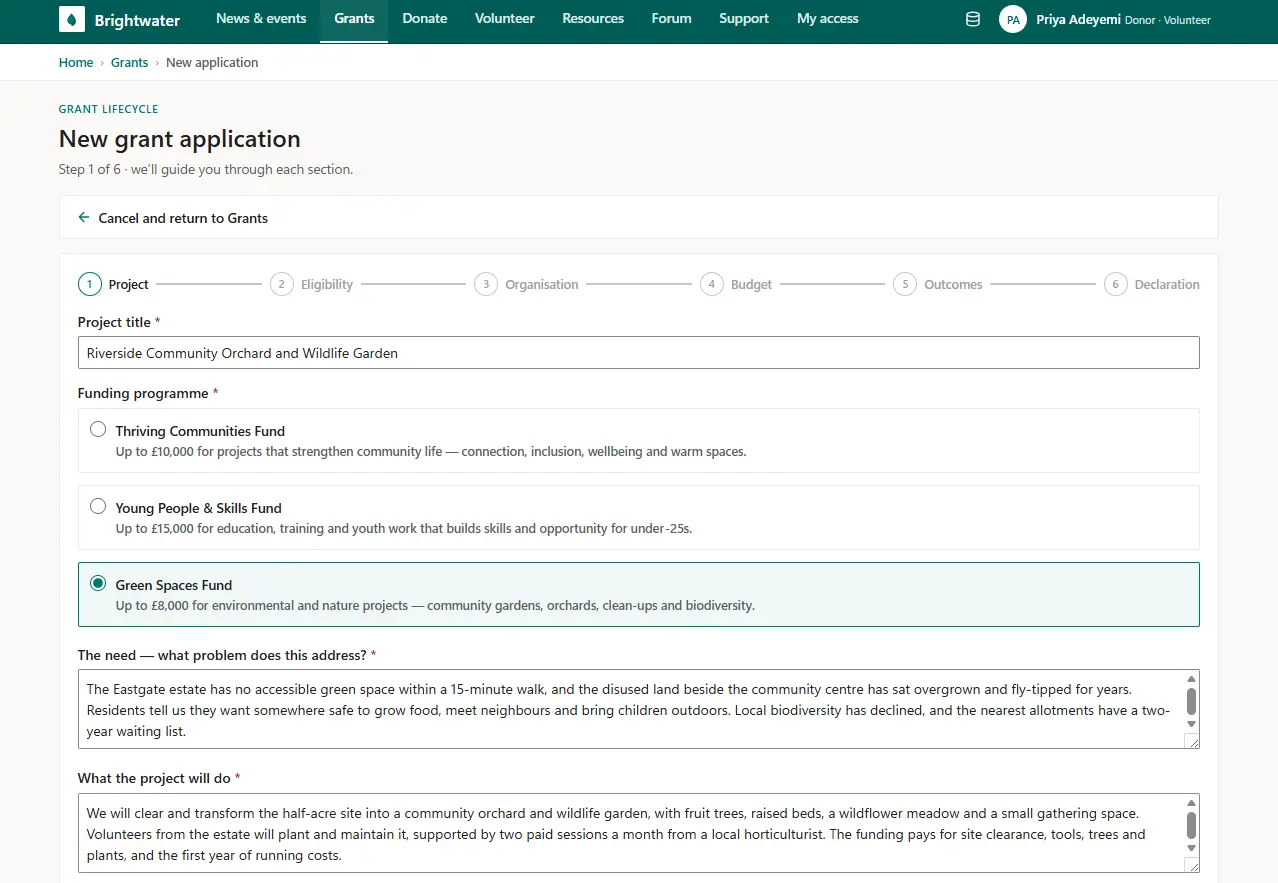
Questions appear only when relevant, which means a small grant doesn’t drag someone through sections meant for a major one. Existing information about a verified applicant can be presented as pre-filled, so time isn’t wasted asking someone to retype what you have on record.
Supporting documents go in as part of the same process. For example, financial accounts, a safeguarding policy, and a budget breakdown can all be submitted at the right time to avoid back-and-forth emails.
We configure each form around the programme, eligibility rules, and the information needed to make decisions. We cover the mechanics of how these portal forms work, including conditional questions and pre-filled fields, in our page on integrated web forms.
How a grant portal connects to your CRM
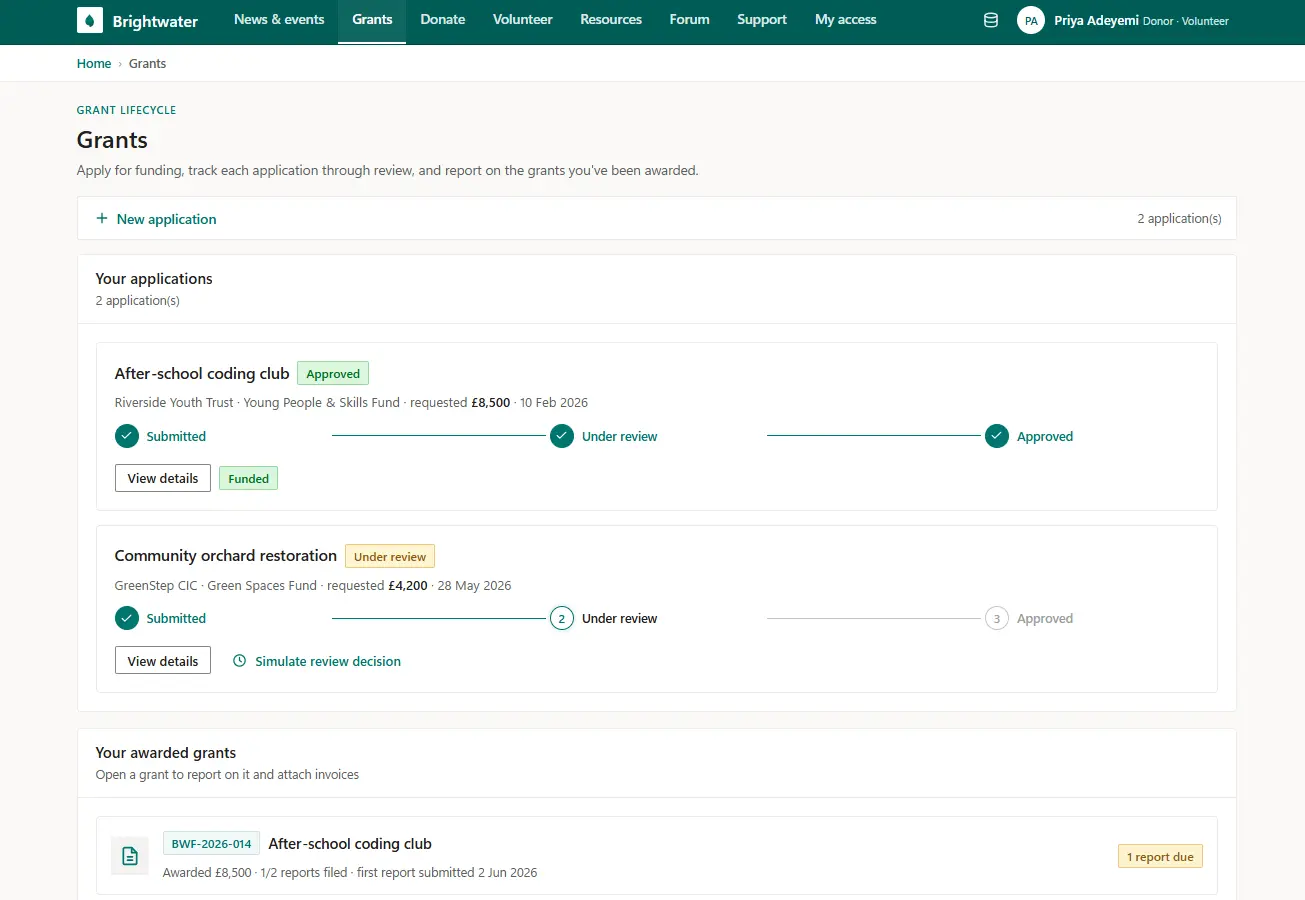
A web form emails you answers. A portal writes them into Dynamics 365 as a record your team can work with. The application arrives complete and structured, with any attachments, tracked to the right programme, ready for an assessor to pick up.
It also arrives linked to related records. Many applicants will be known to you, a past recipient, a current member, or an organisation you have funded before. Because the portal reads and writes the same records your team uses, that history sits alongside the application for an assessor to see the full picture.
Managing grants and reporting after the award
Once an award is made, reporting and oversight begin, and your portal can handle them as naturally as it did for the original application.
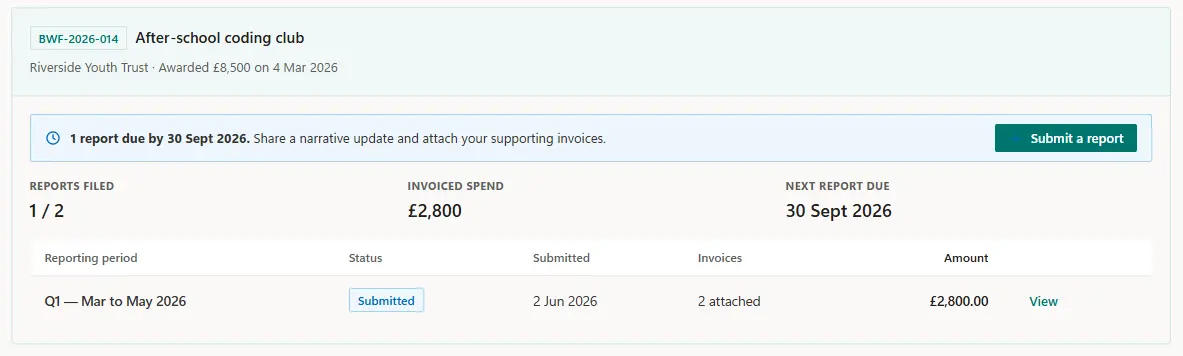
The recipient logs in to the same place they applied, opens their grant, and submits a progress report against it. They write the narrative themselves, what’s been delivered, who has benefited, and how the money has been used. The portal takes their report and supporting invoices, attaches them to the correct grant record, and totals the amounts, keeping the evidence in one place.
Built around how your funding works
Programmes differ, eligibility varies, and reporting demands change, so a portal must reflect those differences. That’s why this is a configuration question.
This website sits on top of your Dynamics 365 data. Microsoft provides a ready-made grant data model for non-profits to build on, and we can shape the architecture, design and data around how you fund. When we scope the outward-facing portal, the work is deciding what to handle first, where the early value should land, and how it grows from there. Start with these priorities, then build out as confidence grows.
Funder reputations are increasingly shaped by people’s experiences.
In IVAR’s 2026 survey, 51% of charities felt grant-making had improved since 2022, though only 9% said it had improved a lot, and 28% reported it had got worse.
Your application form is part of that reputation. What does yours say about you?
If your grant application process creates barriers that cause people to drop out, these are the parts worth fixing first. Tell us how you fund, and we’ll show you what a portal could do for you.
See how we approach membership and community portals on our dedicated practice site, The Portal Company, or read more about our consultancy work.