

In short: Channel conflict usually starts because partners cannot see which accounts are already claimed elsewhere in your channel. A deal registration portal lets them check a prospect against your Dynamics 365 data before they continue, then time-stamps and protects their lead.
A partner rings you, pleased with themselves. They’ve just had a positive meeting with a new prospect, and they wanted you to hear it from them.
You already know this call might get awkward because another partner registered the same account a few weeks ago. It’s tracked in your CRM, but the caller had no way of knowing before they put in the hours. Now you get to be the one who tells them.
That is the gap a web portal closes. Your Dynamics 365 system might already track who registered what and when, but until partners have visibility of this information, they risk chasing the same accounts, and then you have to break the news.
The stakes of getting this right are climbing. Forrester’s State of B2B Partner Ecosystems 2025 found that two-thirds of B2B leaders expect partner-influenced revenue to grow by more than 30% year on year, so more of your target now rides on maintaining a channel that partners see as fair, transparent and worth investing in.
Deal registration gives partners a live check the moment they claim an account, so they can find out the situation before committing resource.
Channel conflict starts with a visibility gap
When two partners end up on the same account, the instinct is to look for who broke the rules. Usually, no one did. Your rules of engagement can be crystal clear, your territories fair, yet conflicts still occur, because partners cannot see which accounts are already registered by another provider in your channel.
You can see it in Dynamics 365 Sales, but the partner about to ring that prospect can’t. They’re making a reasonable decision with only half the picture.
Rules written in a PDF don’t help here. What changes the outcome is allowing partners to validate their prospective deals against your live data at the outset, which makes non-compete decisions less contentious or costly to change.
Inside the deal registration check
Here is what a partner can experience when you offer a registration portal.
They log the prospective customer they want to pursue, and background processes checks that name against your live Dynamics 365 records before registering the deal.
What counts as a clash is yours to set, whether that is an open opportunity, an active lead, or both, so the check matches how your programme defines ownership.
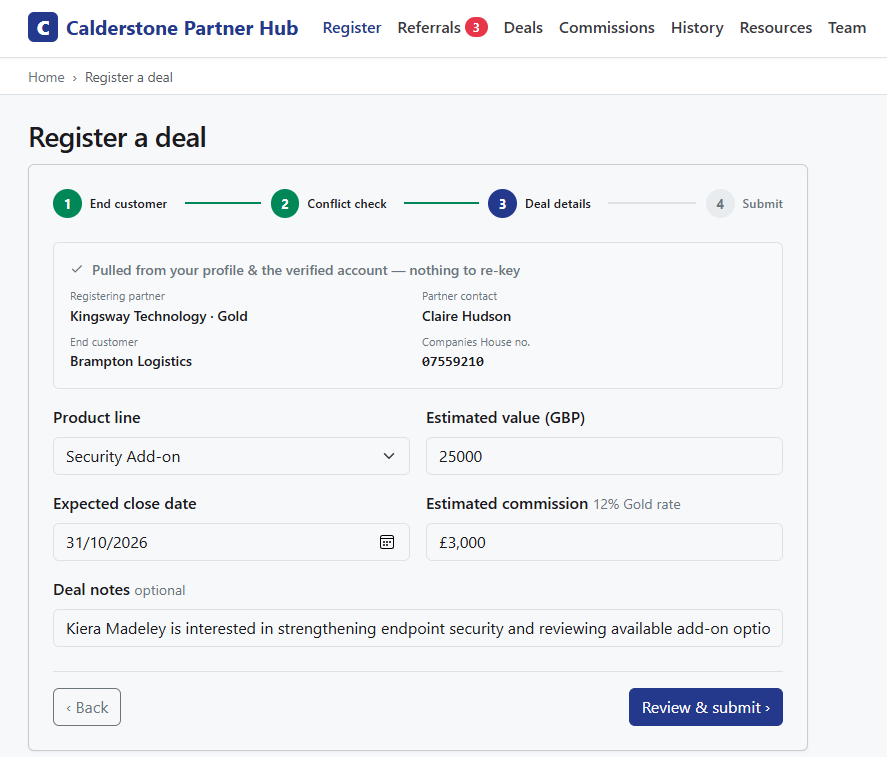
When the account is clear, the partner gets an instant registration, time-stamped and protected for a set window, so their groundwork is safe while they pursue it.
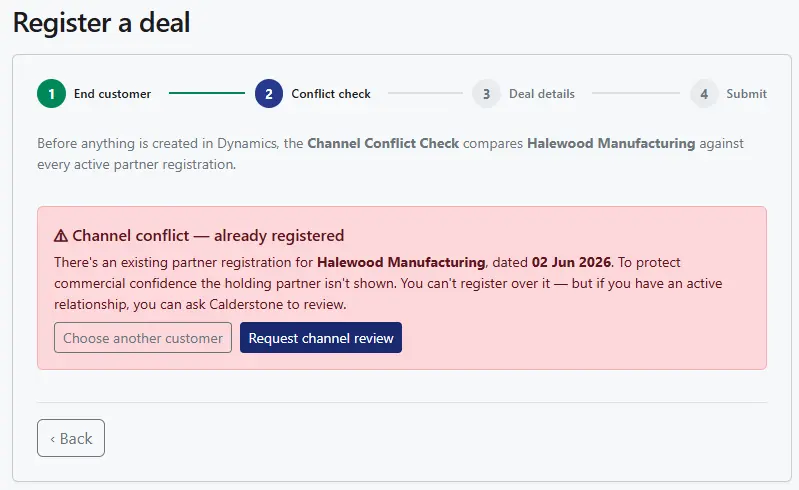
A prospect already registered returns a straight no, without revealing which competitor holds it, because a rival’s pipeline is confidential.
A partner never sees anyone else’s deals, only straight answers about their own. That is the balance a good portal holds: enough transparency to be trusted and enough discretion to protect channel integrity. Anything less clear-cut comes to you, which is where judgement comes in.
Fewer channel conflict disputes
When two partners both feel they have a strong claim, someone has to decide. Doing that on memory and gut feeling means that whoever loses is left wondering whether you simply back your favourites.
That suspicion is corrosive. It’s the reason why a partner jealously guards their pipeline or looks for opportunities somewhere they feel the odds are even.
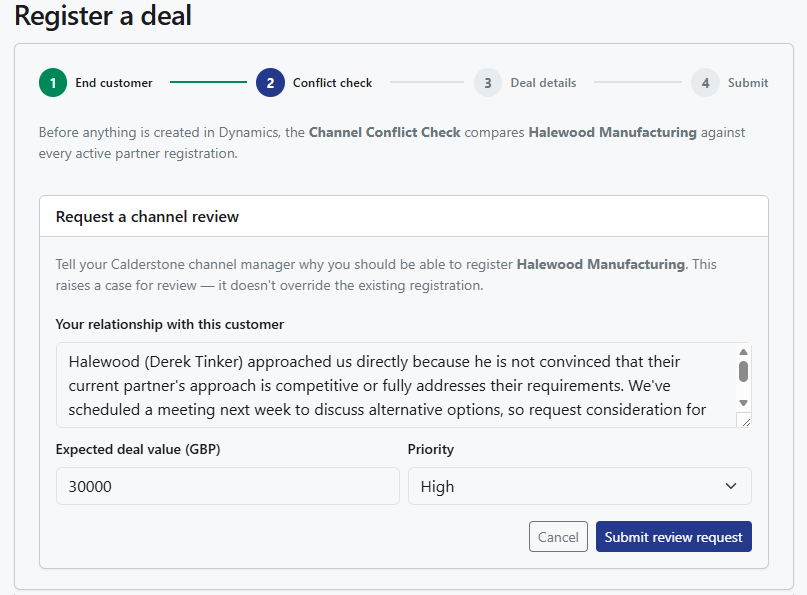
Some deal registrations need judgement. An appeals process can be built in, enabling partners to challenge a block by sharing background detail and making a case for why they should be allowed to work on an account.
These challenges that require a human eye are routed to the partner manager for decision. What the portal gives you is the evidence to make these calls transparent, so that everyone sees a fair process.
Partner pipeline you can trust
Because everything done in the portal is added to Dynamics 365, newly registered deals arrive already correctly attributed to the right partner. It means that a partner-influenced pipeline can always be assessed on demand. You can see it, forecast it, and show it to your board with the same confidence as you would for direct sales.
That matters when you are presenting the channel contribution. The difference is that nothing waits for a manual tidy-up at month-end before the total can be trusted.
The payback from a partner portal hub is also time saved. Status questions, register-my-prospect emails, and repeated questions about the same collateral: most of these requests are routed to your portal.
A deal registration portal running on Dynamics 365 data
A deal registration portal is not a second system running alongside your CRM. The ownership data, the pipeline, and the rules already live in Dynamics 365. That portal is the layer that securely shows partners a controlled slice of it and captures their inputs.
That is the work we do at ServerSys: taking processing rules and the logic you already run in Dynamics 365 to give partners a clean, secure way to act on it through a portal built on Microsoft Power Pages, so it fits your Microsoft stack.
Are your partners still making big decisions without the material information you could easily share?
Each week, you risk spending time refereeing avoidable conflicts. What you get back are hours for the conversations that build partner relationships worth having.
If you’d like to see what that looks like, we can walk you through a working partner hub. Contact us to arrange a demo.
See how we approach partner portals on The Portal Company, or read more about our portal consultancy work.